

WATER EXTRACTION
Water Extraction in Pomona, CA
Getting the water out is the first step of a cleanup, and it is only the first step. Here is how extraction works and what has to happen after it.
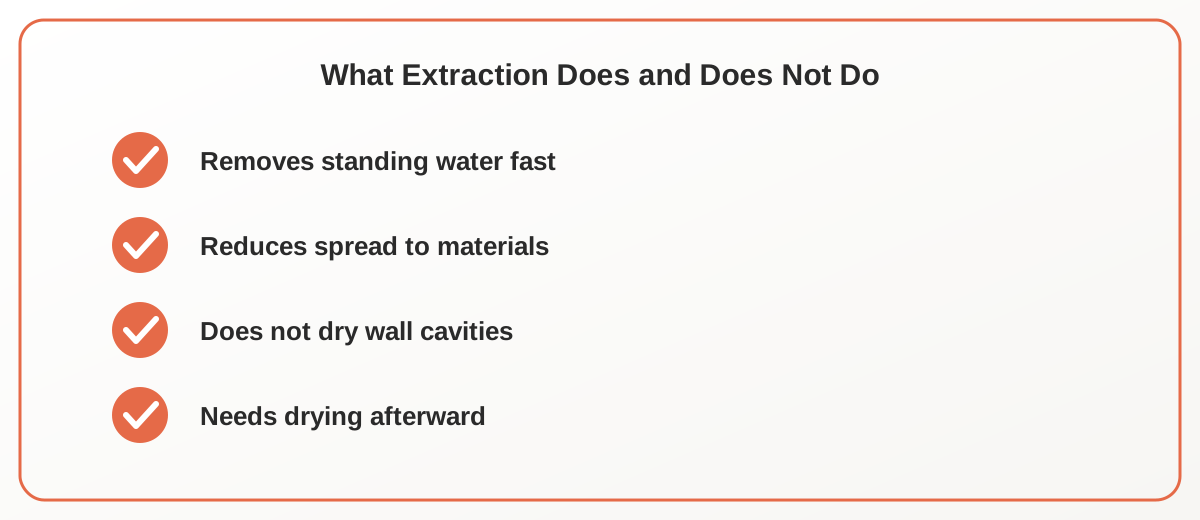
The faster standing water is removed, the less time it has to soak into flooring, wall bases and cabinets. Extraction also makes drying far more efficient, because equipment can then work on moisture in the materials instead of competing with a flooded floor.
Water extraction is one part of the job. For the overall process see water damage restoration, and for what comes next see structural drying.
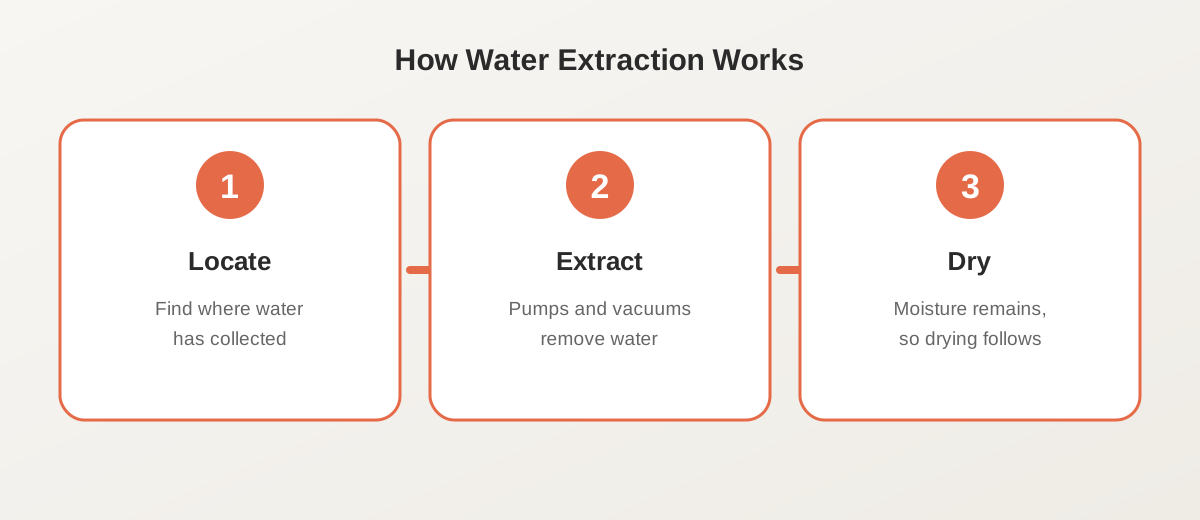
How Extraction Works
Remove deep standing water
Submersible pumps move large volumes of water out of the space quickly.
Extract from floors and carpet
Extractors and wands pull water out of carpet, pad and hard floors. Wet vacuums handle edges and small areas.
Lift or remove what holds water
Saturated pad is often lifted, and carpet may be lifted or removed from tack strips so the subfloor can be reached.
Check for hidden water
Moisture meters and thermal imaging show water that moved under flooring or into walls.
Equipment and When It Is Used
| Equipment | Used for |
|---|---|
| Submersible pump | Deep standing water |
| Truck-mounted or portable extractor | Large areas of carpet and pad |
| Wet vacuum | Small areas, edges and corners |
| Moisture meter and thermal camera | Finding water that extraction missed |
Carpet and Padding: Save or Replace?
Carpet can often be saved when the water was clean, the response was fast and the carpet was extracted and dried properly. The pad underneath holds water like a sponge and is usually replaced. Contaminated water, or carpet that stayed wet for days, generally means replacement.
Why Extraction Alone Is Not Enough
After extraction, the materials still hold moisture that evaporates into the air. If it is not dried out, it can lead to swelling, odor and mold. This is why extraction is followed by drying with air movers and dehumidifiers and by repeated moisture readings, as covered in our structural drying guide.
What Pomona Homeowners Say
Real feedback about water extraction.
Water had collected across part of our floor after a leak, and we were concerned about it reaching other materials. The team explained how water extraction works and why the area might still need drying afterward. It helped us understand that removing the visible water is only one part of the cleanup.
Our carpet got soaked after a plumbing problem, and we were worried about moisture underneath it. We wanted to understand what could be done about the water and what needed to happen afterward. The team explained the extraction and drying process in a way that was easy to follow.
We had standing water in part of the house and didn’t know whether we were dealing with a simple cleanup or a bigger moisture problem. The team explained the importance of removing the water and checking the affected area afterward. Having the process explained helped us understand what to consider next.
Common Questions
Sources and further reading
Standing water in your home?
Call us. We will explain what extraction involves and what has to happen after it.
Call (840) 226-2371 — 24/7