

EMERGENCY FLOOD CLEANUP
Emergency Flood Cleanup in Pomona, CA
Standing water in your home is both a damage problem and a safety problem. Here is what to deal with first and what emergency cleanup involves.
Indoor flooding in Pomona usually comes from a burst or failed supply line, a water heater or appliance, a sewer backup or storm water entering from outside. The cleanup starts the same way, with safety and speed, but the source decides how careful the handling needs to be.
For the pipe-specific first steps, see what to do when a pipe bursts. For a timeline of the first three days, use the 24 to 72 hour checklist.
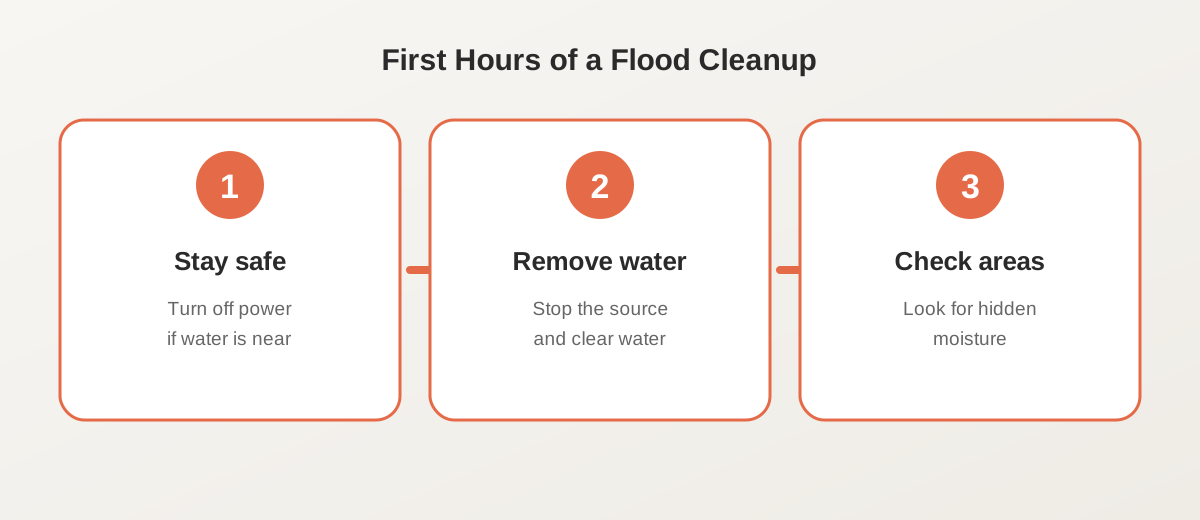
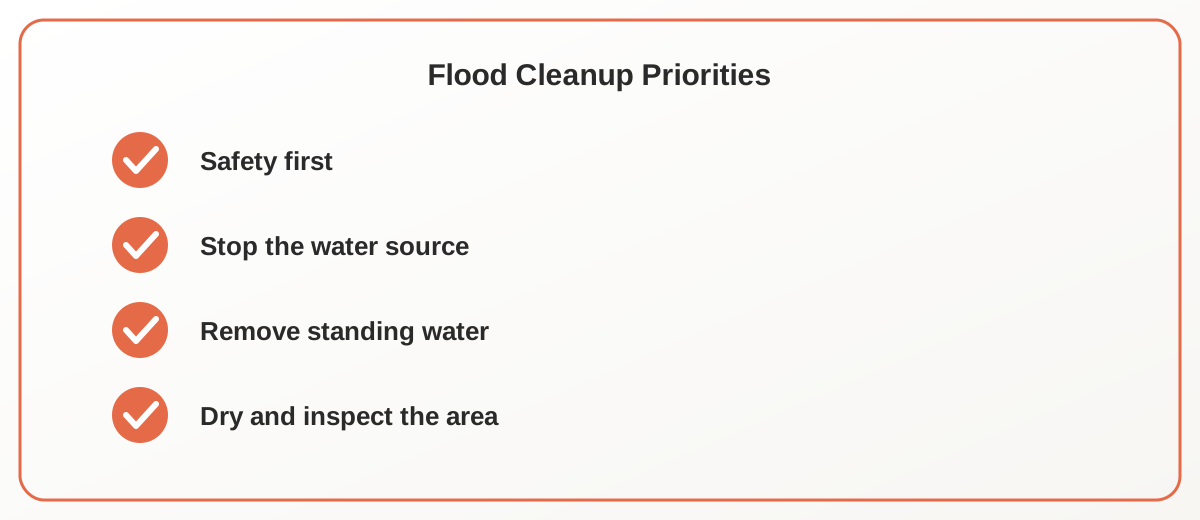
Do These First, in This Order
Stop the source
If a pipe or appliance is the cause, close the shutoff valve or the main. If water is coming from outside or from a sewer line, do not try to stop it yourself.
Think about electricity
Do not walk through standing water if outlets, cords or appliances are in it. If the water is high, have power to the area turned off safely.
Protect what you can
Lift furniture legs onto blocks, remove valuables and rugs, and keep children and pets out of the wet area.
Photograph before you clean
Take photos and video of the water level and damage for your records.
Call for pumping and drying
Standing water and wet materials should be removed and dried quickly to limit damage and mold.
What Kind of Water Is It?
| Source | How it is treated | Why |
|---|---|---|
| Supply line or tank leak | Usually clean water | Lower contamination risk, but can degrade over time |
| Washing machine or dishwasher | Gray water | Some contamination possible |
| Storm water coming in | Treated as contaminated | Picks up soil and debris on the way |
| Sewer backup | Treated as grossly contaminated | Health risk; avoid contact |
Our terms guide explains the water categories in more detail.
What Emergency Cleanup Includes
Water removal
Pumps and extractors take out standing and absorbed water. See water extraction.
Moisture mapping
Meters and thermal imaging show where the water went, including inside walls and under floors.
Removal of what cannot be saved
Saturated pad, insulation and contaminated materials are removed so the rest can dry.
Drying equipment
Air movers and dehumidifiers dry the structure, covered in structural drying.
Common Mistakes
- Using a household vacuum on standing water
- Walking through water near electrical items
- Waiting to see if it dries on its own
- Throwing away everything before photographing it
- Mixing up clean water with sewage or floodwater
What Pomona Homeowners Say
Real feedback about emergency flood cleanup.
We found water across part of our floor and were worried it would spread into other areas of the house. We needed to understand what should be dealt with first. The team explained the cleanup process and why the affected areas needed to be checked after the water was removed. It helped us understand the next steps during a stressful situation.
An unexpected water problem left one of our rooms wet, and we were concerned about damage to the flooring and nearby walls. The team explained what the cleanup process involved and why drying was important afterward. We appreciated having a clearer idea of what needed attention.
We had water inside our home after a plumbing issue and weren’t sure how to handle the cleanup properly. The team explained the importance of removing the water and checking the affected areas for remaining moisture. I’d recommend taking a water emergency seriously instead of only dealing with the visible mess.
Common Questions
Sources and further reading
Water in your home right now?
Call us. We will walk you through the first steps and tell you what happens next.
Call (840) 226-2371 — 24/7