


Mold Remediation in Pomona, CA
Mold Remediation in Pomona, CA
Mold can start growing within 24 to 48 hours after water damage. Call (840) 226-2371 to talk through safe next steps.
Mold needs moisture, so it often follows a leak, flood or slow plumbing problem. Catching it early keeps cleanup smaller and cheaper.
The key point is that cleaning visible mold without fixing the water source usually means it comes back.
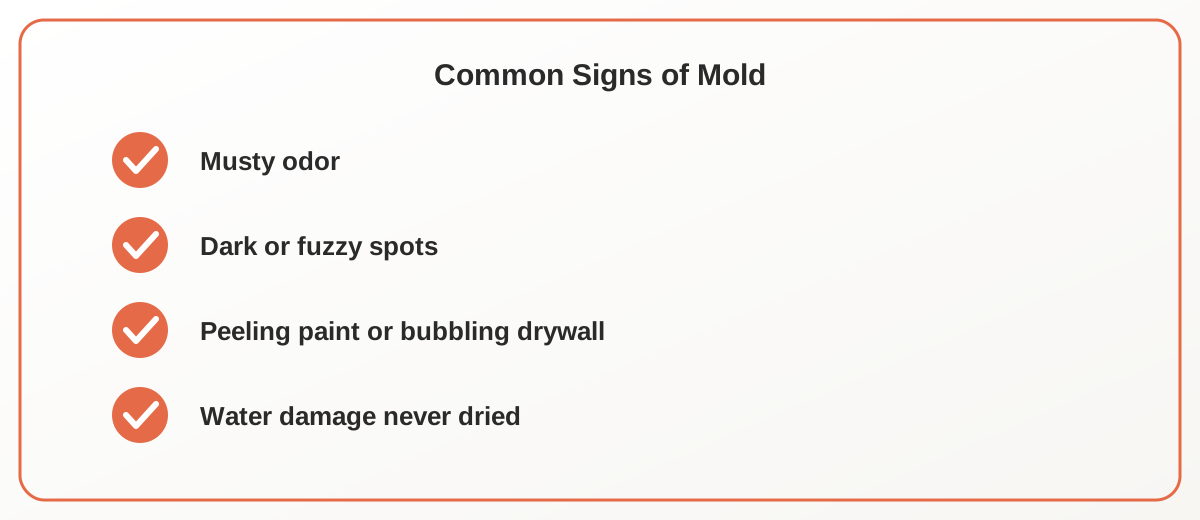
Common Signs of Mold
- Musty odor in a room or closet
- Dark or fuzzy spots on walls, ceilings or baseboards
- Peeling paint or bubbling drywall
- Recent water damage that was never fully dried
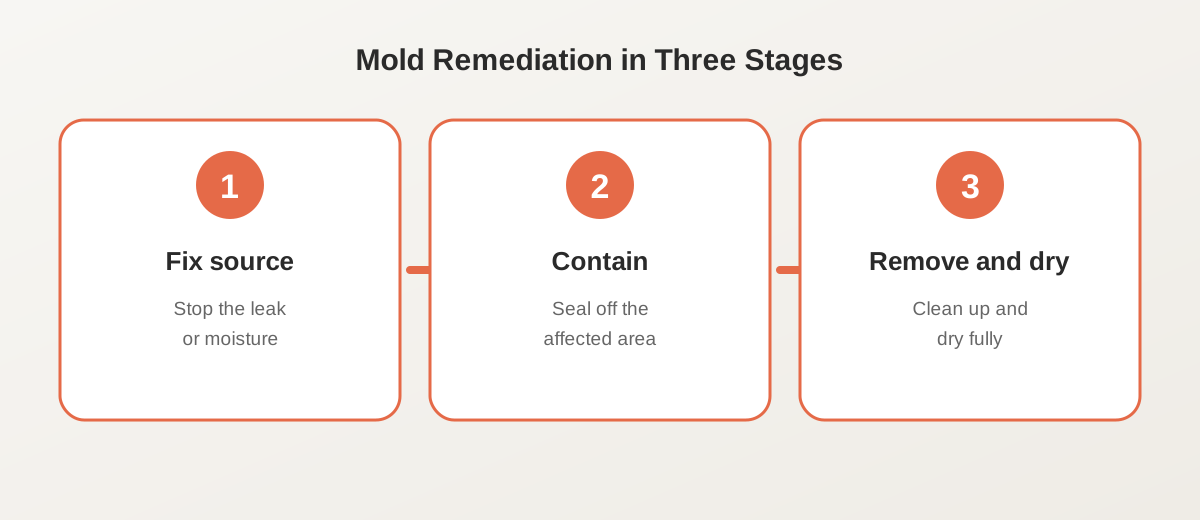
Remediation Steps
Stop the water
Repair the leak or source of moisture first.
Contain the area
Seal off the space so spores do not spread to other rooms.
Remove affected materials
Porous materials like soaked drywall are usually removed and bagged.
Clean and dry
Surfaces are cleaned and the area is dried until readings are normal.
When to Get Help
Large areas, mold after contaminated water, or anyone in the home with breathing problems are good reasons to bring in a professional rather than DIY.
Small Mold or Large Mold: What Can You Handle?
The EPA’s guidance is a useful starting point: a patch of mold smaller than about 10 square feet, on a hard surface, caused by a problem you have already fixed, is often something a homeowner can clean carefully. Wear gloves, eye protection and an N95 mask, keep the area ventilated, and never mix bleach with other cleaners.
Larger areas are different. So is mold on drywall, insulation or carpet pad that has soaked up water, mold that returns after cleaning, or any case where someone in the home has asthma, allergies or a weakened immune system. In those cases the material usually has to come out, and the work needs to be contained so spores do not travel to clean rooms.
- Under about 10 square feet, hard surface, source fixed: careful DIY cleaning is often reasonable
- Larger areas, soaked drywall, insulation or pad: plan on professional containment and removal
- Mold with a strong musty smell but nothing visible: look for a hidden leak first, such as the ones covered in our hidden leak guide
What Professional Remediation Looks Like
Mold work follows the same logic every time: stop the moisture, keep the spores contained, remove what cannot be saved, and dry what is left. Skipping the first step is why so many cleanups fail. If the wall is still wet, the mold comes back.
Containment usually means plastic sheeting over the work area and the air filtered through a HEPA filter, so cleaning does not push spores into the rest of the house. Porous materials such as soaked drywall are cut out and bagged, hard surfaces are cleaned, and the area is dried with the same equipment used after a flood. If the space is still damp, the structural drying process comes before any rebuilding.
Ask any company to explain which materials will be removed, how the area will be sealed off, how drying will be checked, and what the written estimate includes. A clear, patient answer is a better sign than a fast, vague one.
What Affects the Cost of Mold Remediation
There is no honest flat price, because every job is different. The main factors are how large the affected area is, which materials are involved, how hard the space is to reach, whether the moisture source has been fixed, and whether testing is needed. Rebuilding after removal, such as new drywall, paint and flooring, is usually quoted separately from the remediation itself.
If the mold followed a plumbing failure or a storm, check your policy early. Coverage often depends on how sudden the water event was, and photos taken before cleanup help. Our insurance claim guide explains what to document.
Mold After Water Damage in Pomona Homes
Many Pomona homes were built decades ago, and aging galvanized or copper lines can leak slowly inside walls, under sinks or beneath a slab. A slow leak is quiet, so the first sign is often a musty smell or a stain rather than a puddle. Water heaters, washing machine hoses and bathroom fixtures are the other common starting points.
If you have had standing water, start with water extraction and drying as quickly as you can, ideally within the first day or two. Our mold timeline shows how risk rises the longer materials stay wet, and the slab leak floor guide covers the hidden-moisture case.
What Pomona Homeowners Say
Real feedback from Pomona homeowners
We noticed a musty smell in an area that had previously been affected by water and were concerned about possible mold. We wanted to understand what could be causing it rather than simply covering up the smell. The team explained why the area and the moisture source needed to be assessed.
After dealing with a leak, we noticed what looked like mold near the affected area. We weren’t sure how to approach the problem or whether the moisture issue had been fully addressed. The team explained the assessment and remediation process and why dealing with the source of moisture is important.
We were concerned about possible mold in an area that had stayed damp after a plumbing issue. We wanted to understand what needed to be checked and what remediation might involve. The team explained the importance of assessing the affected area and addressing the underlying moisture problem.