

SLAB LEAK AFTERMATH
What a Slab Leak Does to Floors and Walls, and How Drying Works
Finding and fixing the leak is only half the job. Water can stay trapped in concrete, flooring and wall bases long after the pipe is repaired.
A slab leak is a leak in a water line running in or under a concrete foundation. This page is about what happens after the leak: the damage to floors and walls and how the drying works. For warning signs, locating the leak and repair options, read slab leak detection and repair in Pomona.
Slab leaks are easy to underestimate because the water is out of sight. It does not stay in one place. It spreads under the flooring, wicks into the base of walls and cabinets, and can be soaking materials for weeks before anything shows on the surface.
Why Slab Leak Water Is Harder to Dry
Concrete is porous and holds a lot of moisture, and it releases it slowly. Flooring laid on top acts like a lid, so water trapped between the slab and the floor covering evaporates far more slowly than water on an open surface. Meanwhile the water travels sideways under the floor and climbs into drywall, baseboards and the toe-kick of cabinets by capillary action.
That is why a floor that looks only slightly damp can be wet across a much larger area underneath. It is also why surface mopping and a box fan are rarely enough, and why the area is measured before it is dried, not after.
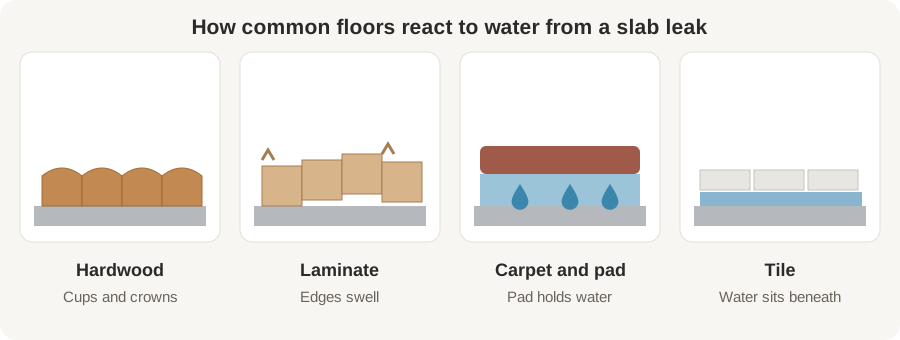
How Each Floor Type Reacts
| Flooring | What water does | What usually happens |
|---|---|---|
| Solid hardwood | Cups at the edges, crowns, gaps open or boards buckle | Sometimes dried in place if caught early; often replaced once buckled |
| Engineered wood and laminate | Edges swell and layers separate | Often replaced, because swelling does not reverse |
| Carpet and pad | Pad holds water and wicks it back up, odor develops | Pad is usually replaced; carpet can sometimes be dried if the water was clean and the response was fast |
| Tile and grout | Tile itself is unharmed, but water sits beneath it in the bed and the slab | Tile often stays, with moisture under it checked and dried |
| Vinyl plank and sheet | Traps moisture underneath and edges lift | Often lifted so the layer below can dry |
Whether a floor is saved depends on the material, how long it stayed wet and whether the water was clean, which is why a moisture reading beats guessing.
The Drying Process, Step by Step
Confirm the leak is stopped
Drying a structure while water is still feeding it is wasted effort, so the line is repaired or isolated first.
Extract standing water
Pumps and extraction tools remove free water from floors and low areas before drying equipment goes in.
Map the moisture
Moisture meters and a thermal imaging camera show where water has traveled in flooring, walls and cabinets, including areas you cannot see.
Set air movers and dehumidifiers
Air movers push air across wet surfaces, and dehumidifiers pull the vapor out of the air so the materials can keep releasing moisture.
Remove what cannot dry
Wet baseboards, the bottom of drywall, saturated pad or buckled flooring may need to come out so the layer behind can dry.
Monitor until dry
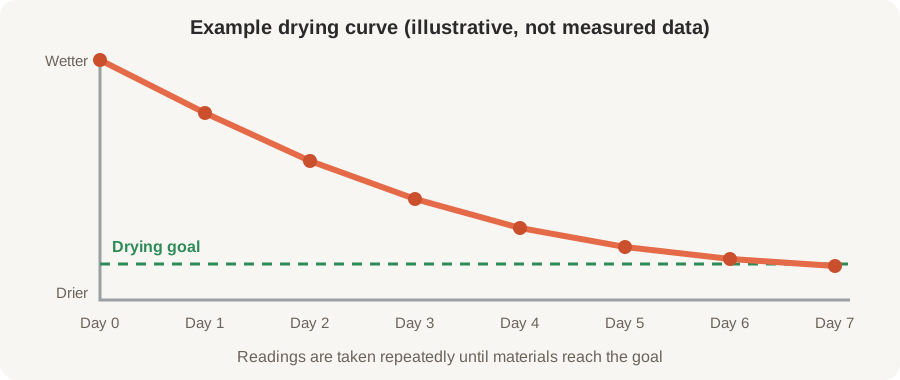
Readings are repeated over several days and equipment is adjusted or removed only when the materials reach their target dryness.
Our structural drying guide goes further into equipment and timing, and the terms guide defines the words you may see on an estimate.
Signs the Slab Is Still Wet
- A musty smell that returns after cleaning
- Flooring that keeps cupping, lifting or developing gaps after the leak is fixed
- Baseboards or the bottom of walls that stay stained or soft
- White powdery deposits on concrete or the base of walls
- Rooms that feel humid when everything else in the house is dry
Mold Risk and Timing
Materials that stay wet for more than about 24 to 48 hours are at risk of mold growth, and hidden moisture under flooring is a common cause of mold that appears weeks later. Prompt drying and humidity control are the main defenses. The mold timeline explains what to watch for and when to bring someone in.
What About Insurance?
Coverage for slab leaks varies widely between policies, particularly around sudden versus gradual leakage and the cost of accessing the pipe. Photograph the damage, keep the repair invoice and the moisture readings, and read the policy wording. Our California insurance guide covers the general process, but your policy and your insurer decide your coverage.
Common Questions
Sources and further reading
Leak fixed but floors still wet?
Call us. We will explain what is likely to dry, what is likely to go and what the next step is.
Call (840) 226-2371 — 24/7