


LOCAL RISK GUIDE
Water Damage Risks by Pomona Neighborhood
A downtown apartment, an older central-Pomona bungalow and a hillside home in Phillips Ranch do not leak for the same reasons. Here is what to watch for where you live.
Pomona covers about 23 square miles in the Pomona Valley of eastern Los Angeles County, and its neighborhoods were built in very different eras. That mix is why generic advice only goes so far. The sections below connect what is known about each part of the city to the kinds of water problems that tend to follow.
One honest limit first: we do not have neighborhood-by-neighborhood claim data, and neither does anyone else publishing for free. Treat what follows as informed patterns based on housing age, terrain and occupancy, and use it to know what to inspect, not to predict what will fail.
Five Parts of Pomona, Five Different Risks
Downtown and the Arts District
Older mixed-use buildings and apartments often share walls, stacks and risers, so one failed line can reach several units. Check shutoffs for each unit and know who to call first.
Lincoln Park and older central streets
Historic and mid-century homes can still have original galvanized supply pipes and cast iron drains, which wear out from the inside. See the warning signs.
Phillips Ranch and hillside streets
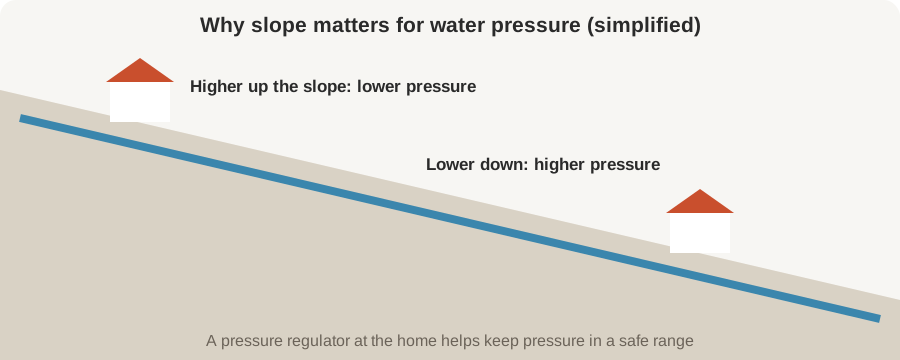
This master-planned area in southwest Pomona sits on hilly ground, from roughly 800 feet up to about 1,400 feet. Homes lower on a slope can see higher water pressure, so a working pressure regulator matters.
Spadra and the Cal Poly Pomona area
Homes and apartments near the university commonly include rentals and student housing, and units that sit empty over breaks are a risk. A leak running for days in a vacant unit is a common recipe for severe damage and mold.
Garage and utility-room homes across the city
Wherever a home is, the water heater often lives in a garage or closet. A tank failure there floods floors and stored belongings fast. See the water heater guide.
What Pomona’s Climate Adds
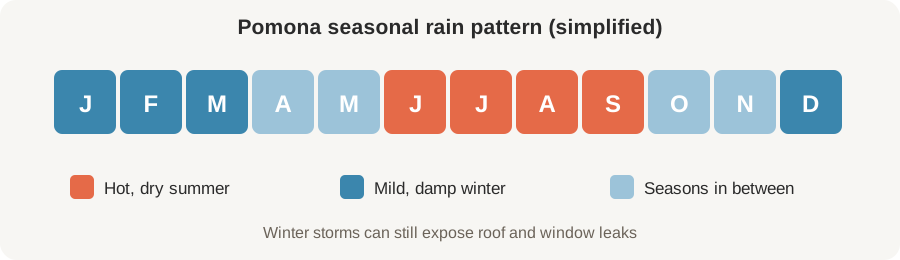
Pomona has a Mediterranean climate, with hot dry summers and mild damp winters. Average annual rainfall is about 14 inches, most of it in the cooler months, so water problems are not limited to plumbing. Winter storms can find weak spots in roofs, flashing and window seals, and the same hours-matter drying rules apply to water from above. Heavy summer use of hot water and air conditioning also keeps heaters and condensate lines working hard.
Water in the San Gabriel Valley is also generally hard, which leaves mineral scale in pipes and heaters and shortens the life of both. That is not unique to Pomona, but it makes older systems here age faster than the calendar alone suggests.
Housing Facts That Shape the Risk
| Fact | Figure | Why it matters for water damage |
|---|---|---|
| Renter-occupied housing | About 47 percent (2020 Census) | Leaks in rentals often go unreported. See our landlord guide. |
| Average household size | About 3.4 people (Census estimate) | More laundry, showers and dishwashing wear fixtures and supply lines faster. |
| Median owner-occupied home value | About 570,000 dollars (Census estimate) | Higher stakes, so the repair vs. re-pipe decision deserves a careful look. |
Figures are rounded from U.S. Census Bureau sources and can change with each release. The point is the pattern: busy, often older homes with a large share of renters.
A Five-Minute Check for Any Pomona Home
Find your main shutoff
Know where the main water valve is and that it turns. Everyone in the household should know.
Read the water meter
With every tap and appliance off, watch the meter for a few minutes. If it moves, water is going somewhere. See how to find a hidden leak.
Look at your water pressure
Unusually strong or weak pressure at several taps is worth a closer look, especially on a slope.
Inspect the water heater
Check for rust at the base, tight earthquake straps and a drain pan with a pipe if it sits indoors.
Look under sinks and behind appliances
Stains, swelling cabinet bases and braided hoses that are old or kinked are the cheapest warnings you will get. Our prevention checklist has more.
Where We Respond
We respond across Pomona and the nearby San Gabriel Valley and Inland Empire cities. The contact page shows the full service area, and if water is already spreading, the first thing to do is shut off the main and read the first-steps guide.
Common Questions
Sources and further reading
- U.S. Census Bureau QuickFacts: Pomona city, California
- City of Pomona
- Phillips Ranch, Pomona (Wikipedia)
Water damage anywhere in Pomona?
Call us. We will tell you what to do first and what your neighborhood means for the repair.
Call (840) 226-2371 — 24/7