


WATER DAMAGE RESTORATION
Water Damage Restoration in Pomona, CA
Drying the house is only the middle of the job. Here is how restoration works from the first call to a repaired home, and what to ask along the way.
When water gets into a home, the visible puddle is rarely the whole story. It travels into flooring, wall bases, insulation and cabinets, and what happens in the first days decides whether those materials can be saved. Restoration is the plan that connects the emergency work to the final repair.
This page explains the whole process. For the equipment and drying science, see structural drying, and for pumping out standing water see water extraction.
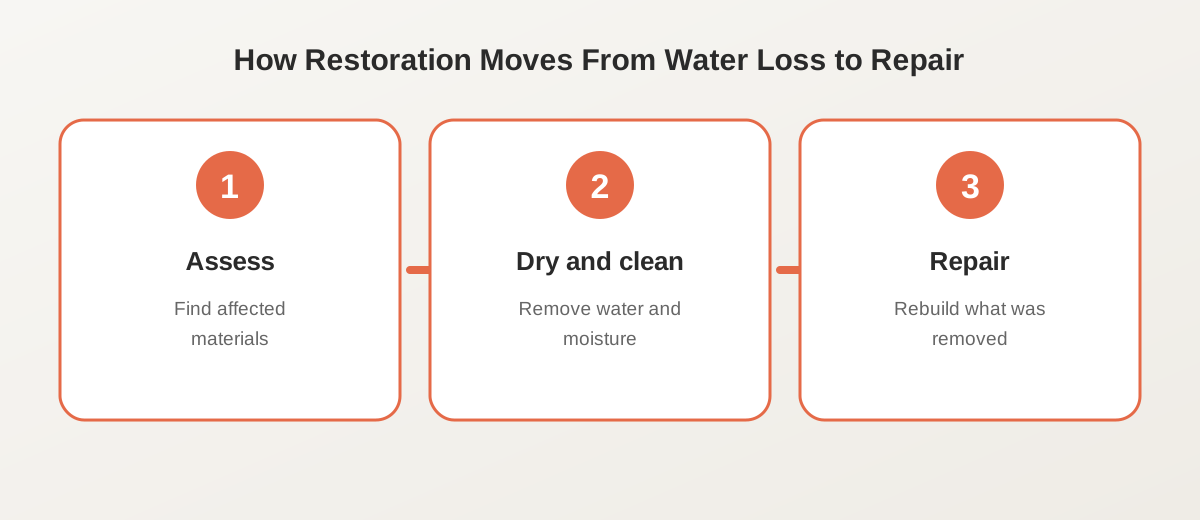
The Four Stages of Restoration
Assess and stop the damage
We find the source, shut it off and check how far the water has traveled using moisture meters and thermal imaging, including areas you cannot see.
Remove the water and wet materials
Standing water is extracted, and materials that cannot be dried, such as soaked pad or contaminated drywall, are taken out.
Dry and monitor
Air movers and dehumidifiers dry the structure, and moisture readings are repeated until the materials reach their drying goal.
Clean, repair and rebuild
Surfaces are cleaned and treated, then flooring, drywall, paint and trim are repaired or replaced as needed.
What Usually Gets Saved and What Usually Goes
| Material | Often dried and kept | Often removed |
|---|---|---|
| Drywall | Clean water, caught quickly | Saturated, swollen or contaminated |
| Solid hardwood | Caught early, not yet buckled | Cupped badly or buckled |
| Carpet | Clean water and a fast response | Contaminated or long-soaked |
| Carpet pad | Rarely | Usually replaced |
| Insulation | Sometimes, if dry quickly | Wet batt insulation is often replaced |
| Baseboards and trim | Often, if wiped and dried | Swollen or stained |
These are general patterns. The decision depends on how long the material stayed wet and where the water came from, which is why readings matter more than guesses.
Mitigation, Restoration and Reconstruction
Mitigation is the emergency stage that stops the damage from growing. Restoration returns the home to its previous condition, and reconstruction rebuilds the pieces that had to be removed. A clear estimate tells you which stage each line item belongs to. Our plain-English terms guide explains the vocabulary.
Insurance and Paperwork
Photographs, moisture readings and a written scope of work make an insurance claim easier to support. Keep receipts for emergency services, and read your policy for how sudden and gradual water damage are treated. See our California insurance guide for the general process.
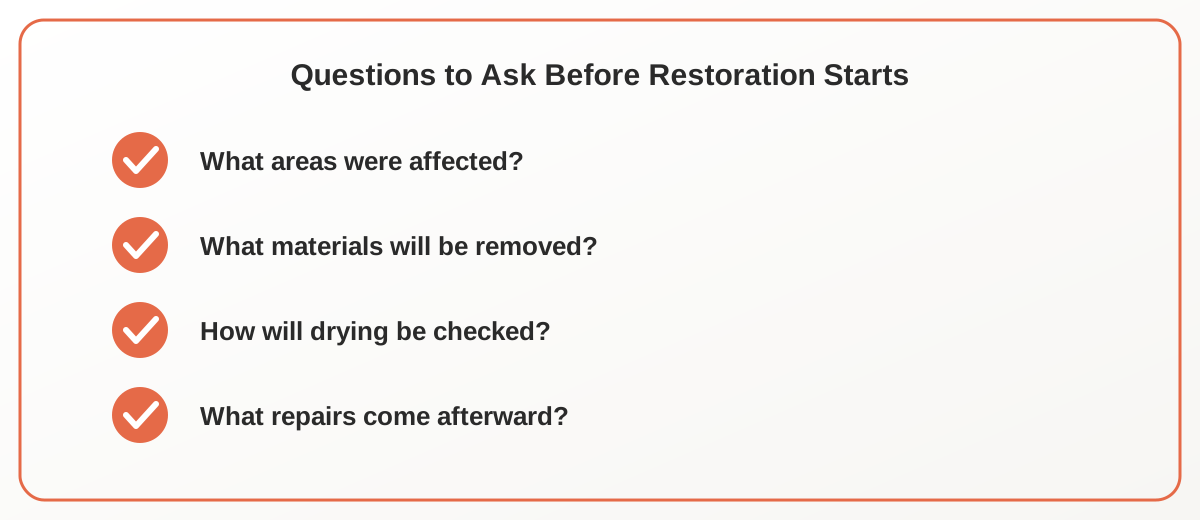
What Has to Be True Before the Job Is Finished
- Moisture readings have reached the drying goal in every affected material
- Hidden areas such as wall cavities and under flooring have been checked
- Any odor has been traced and dealt with, not just masked
- Removed materials are replaced or a clear plan for them is agreed
What Pomona Homeowners Say
Real feedback about water damage restoration.
A plumbing problem left water damage in our home, and we weren’t sure what needed to be repaired after the water was removed. The team explained the difference between cleaning up the water and dealing with the affected materials. That helped us understand the restoration process and what to consider next.
We noticed damage around the base of a wall after a leak and were concerned about what might be happening behind it. The team explained why the affected area needed to be assessed before deciding on the next steps. I appreciated having the process explained clearly instead of being left to guess what the damage involved.
After water got into one of our rooms, we wanted to make sure we understood the work needed to address the damage. The team talked us through the areas that might require cleanup, drying, or further attention. Having a clearer explanation of the process made it easier to understand what restoration could involve.
Common Questions
Sources and further reading
Water damage in your home?
Call us. We will tell you what to do first and what restoration is likely to involve.
Call (840) 226-2371 — 24/7