

Structural Drying in Pomona, CA
Structural Drying in Pomona, CA
Wet drywall, subfloors and framing need to dry fully, not just feel dry. Call (840) 226-2371 to talk through drying steps.
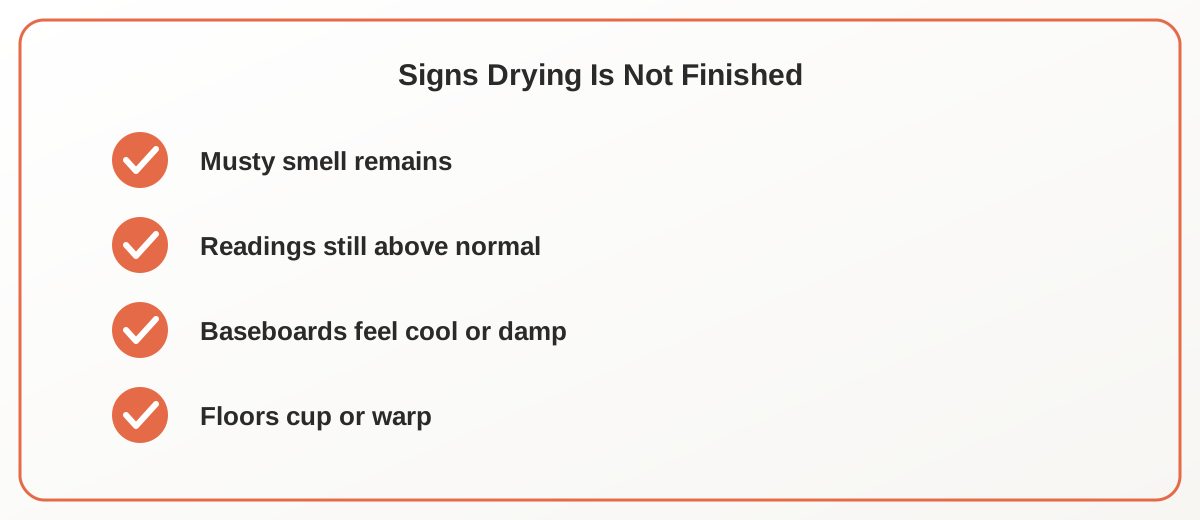
Surface water is only part of a water loss. Moisture soaks into drywall, baseboards, subfloors and wall cavities where it can feed mold and warp materials if it stays.
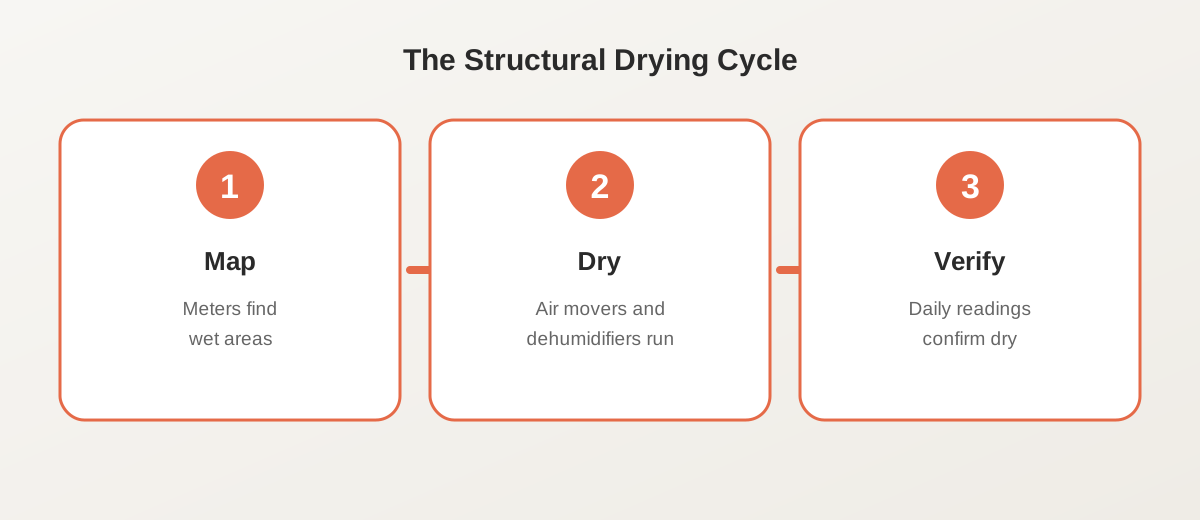
Structural drying is the controlled process of pulling that moisture out. Technicians place air movers and dehumidifiers, then check readings daily so drying stops only when materials are truly dry.
How Structural Drying Works
Wet materials release moisture into the air when air moves across them. Dehumidifiers then pull that moisture out of the room so it cannot settle back into walls and floors.
Moisture mapping
A meter and thermal camera locate wet areas, including ones hidden behind walls.
Equipment placement
Air movers and dehumidifiers are set up based on room size and how wet the materials are.
Daily monitoring
Readings are taken each day and equipment is adjusted as areas dry.
Final check
Equipment comes out only when readings match dry reference levels.
Typical Drying Timeline
| Material | Typical drying time | Notes |
|---|---|---|
| Drywall | 2 to 4 days | Often removed if saturated |
| Hardwood or subfloor | 3 to 7 days | Slower, needs careful monitoring |
| Wall cavities | 3 to 5 days | May need small access holes |
| Concrete slab | Days to weeks | Dries slowly |
What Affects Drying Time
Water category
Clean water dries faster than contaminated water.
Humidity
Pomona’s weather changes how fast rooms dry.
Materials
Dense materials hold moisture longer.
Start time
Starting within 24 hours cuts drying time.
What Pomona Homeowners Say
Real feedback from Pomona homeowners
After a leak was repaired, we were still concerned about moisture inside the walls and under the flooring. We didn’t want to assume everything was dry just because the visible water was gone. The team explained why structural drying matters and what areas may need to be checked after water damage.
Part of our home stayed damp after a water problem, and we weren’t sure how to tell whether the materials had dried properly. The team explained the drying process and why hidden moisture can be an issue. It gave us a better understanding of what needs attention after a leak.
We had water damage near a wall and were concerned that moisture might have reached areas we couldn’t see. The team explained why the affected materials needed to be assessed and dried properly. I’d recommend paying attention to hidden moisture instead of focusing only on the visible damage.
Common Questions
Sources and further reading
Need Help Drying Out Your Home?
Call (840) 226-2371 to talk through next steps.
Call (840) 226-2371 — 24/7