
OLDER-HOME PLUMBING
Galvanized and Cast Iron Pipes: Warning Signs Before They Leak
Old steel supply lines and cast iron drains rarely fail without warning. Here is what rusty water, weak pressure and slow drains are telling you, and when it turns into a water damage problem.
Galvanized steel pipe is steel coated in zinc, and it was widely used for household water supply in the middle of the last century. Cast iron was the standard material for drain, waste and vent lines for even longer. Both are tough, and both are now old. In a city like Pomona, where many neighborhoods were built out decades ago, it is common to find one or both still working behind the walls.
This guide is about the warning signs and what failure looks like. If you are not sure what your home has, start with how to identify the pipes in your Pomona home. If a pipe has already burst, go straight to the first-steps guide.
How Galvanized Supply Pipes Wear Out
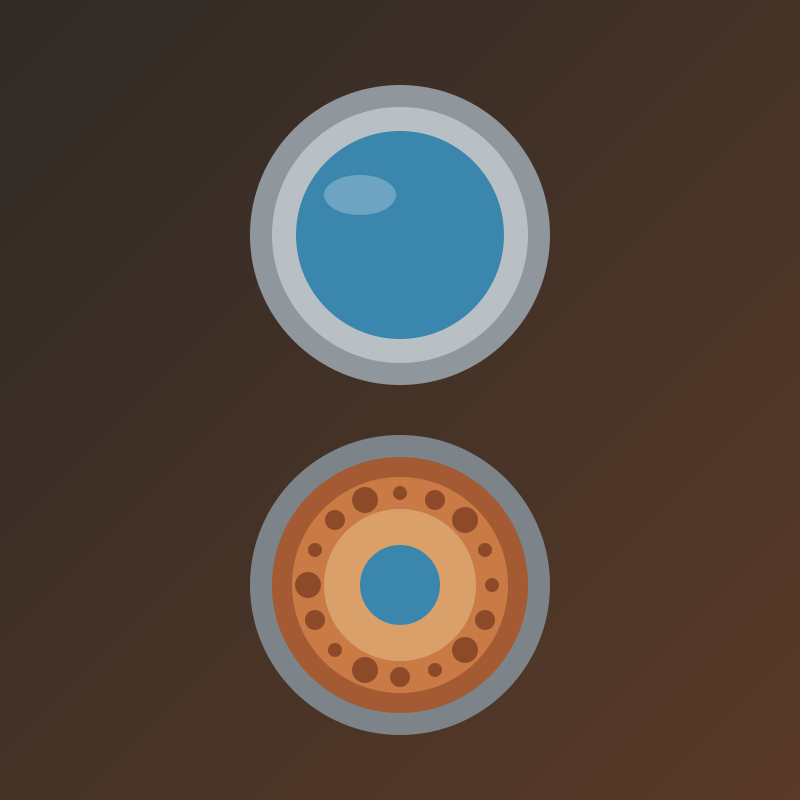
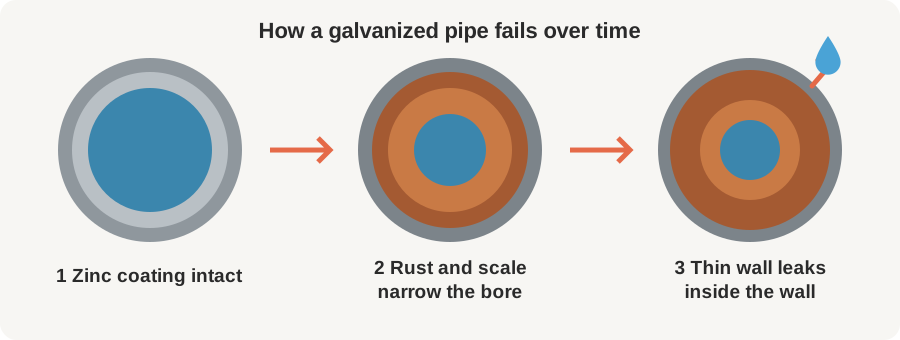
The zinc coating that protects galvanized steel wears away over the years, and hard water, which is common across the San Gabriel Valley, tends to speed that up. Once the zinc is gone, the steel rusts from the inside. Rust and mineral scale build up in rough layers on the pipe wall and narrow the opening, until the pipe is only a fraction of its original diameter. The thinned wall can then leak through a pinhole or split at a threaded joint.
Two homes of the same age can behave very differently. Water chemistry, how much water the household uses and how the pipes were joined all change the rate of corrosion. Census figures put the average Pomona household at more than three people, and a busy household pushes more water through the same narrowing pipes.
Six Warning Signs Worth Acting On
Brown or orange water
Rust-tinted water, especially first thing in the morning or after the water has been off, points to corrosion inside steel pipe.
Falling water pressure
Pressure that drops at several fixtures, hot and cold together, suggests the pipes are narrowing from scale rather than one bad faucet.
Pinhole leaks and damp spots
Small stains, bubbling paint or a musty smell on a wall along a pipe run can be a slow leak inside the wall.
Slow drains and gurgling
Cast iron drain lines rust and roughen inside, which snags waste and slows flow. Gurgling, repeat clogs or sewer odor can follow.
Crusty green or white buildup
Crust at joints and fittings is mineral deposit or corrosion where the metal is slowly weeping.
Repeat repairs
A second or third leak on the same line within a short time usually means the pipe is failing along its length, not at one spot.
No single sign proves a pipe is about to fail. It is the combination, and the age of the pipe, that tells you it is time to look closer.
What Cast Iron Drain Lines Do Differently
Cast iron fails from the inside too, but the symptoms differ. Rust roughens the interior and builds scale, the pipe can crack from settling soil, and old joints can weep. Because drain lines carry waste, a leak here is more than clean water. It can be gray or contaminated water, which changes how the cleanup should be handled. Our 24 to 72 hour checklist explains the water categories.
Under a slab, a cracked cast iron line may leak into the soil first and only show up as a damp spot, an odor or a settling section of floor. These problems are found with a camera inspection or leak detection, not by guessing. For leaks beneath the floor, see slab leak detection and repair.

What Failure Looks Like When the Water Gets Out
A galvanized supply line usually fails in one of two ways. The slow version is a pinhole leak that wets a wall cavity for weeks and goes unnoticed until paint bubbles, baseboards swell or a mold odor appears. The sudden version is a split or fitting failure that releases water at full line pressure and floods quickly. Both need the water shut off at the main and the wet materials dried, which is covered in our structural drying guide.
Insurance often treats a sudden failure differently from long-term leakage or wear, and the worn pipe itself is usually not covered even when the resulting damage may be. See the California insurance guide and read your own policy for the wording that applies to you.
Repair, Re-pipe or Keep Watching?
| Situation | Usually sensible | Why |
|---|---|---|
| One leak, rest of the line in decent shape | Targeted repair and monitoring | Lowest cost, but the next failure may be nearby |
| Repeat leaks or heavily narrowed pipe | Plan a re-pipe | The pipe is failing along its length |
| Brown water and low pressure at every fixture | Have the main supply line assessed | Points to widespread internal corrosion |
| Slow drains and odor with older cast iron | Camera inspection of the drain lines | Finds cracks, scale and low spots without opening walls |
Scope and cost depend on the home, the access and the material chosen. We compare the options in repair vs. re-pipe and explain what drives price in our cost guide.
Common Questions
Sources and further reading
- U.S. EPA: drinking water
- California Department of Insurance
- U.S. Census Bureau QuickFacts: Pomona city, California
Noticing these signs in your home?
Call us. We will tell you plainly whether it is a repair, a re-pipe or something to keep an eye on.
Call (840) 226-2371 — 24/7