
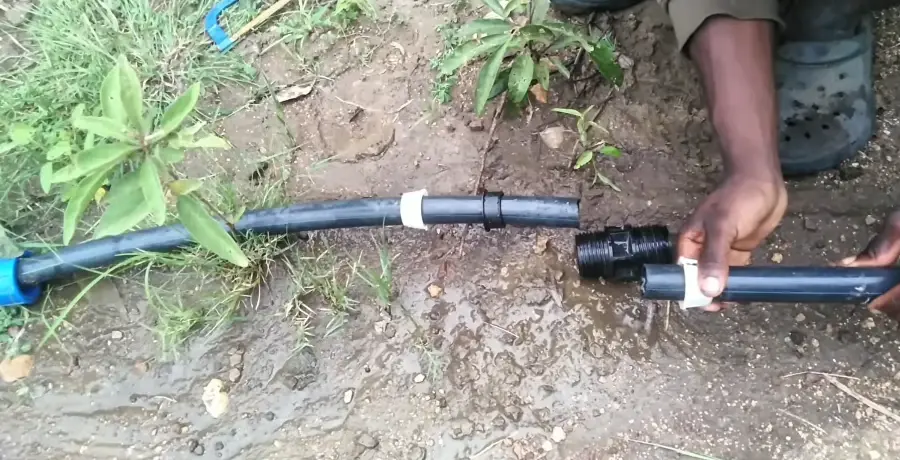
Pipe Repair vs. Full Repipe in Pomona: Which Do You Actually Need?
After a burst pipe, every homeowner faces the same decision: patch the section that failed, or replace the whole system. Both are legitimate answers. The right one depends on what your pipe material is, how old your system is, and whether this failure is likely to be a one-time event or the first of many.
This guide gives you an honest breakdown of when each option makes financial sense — and what the signs look like when a simple repair will just delay a bigger problem.
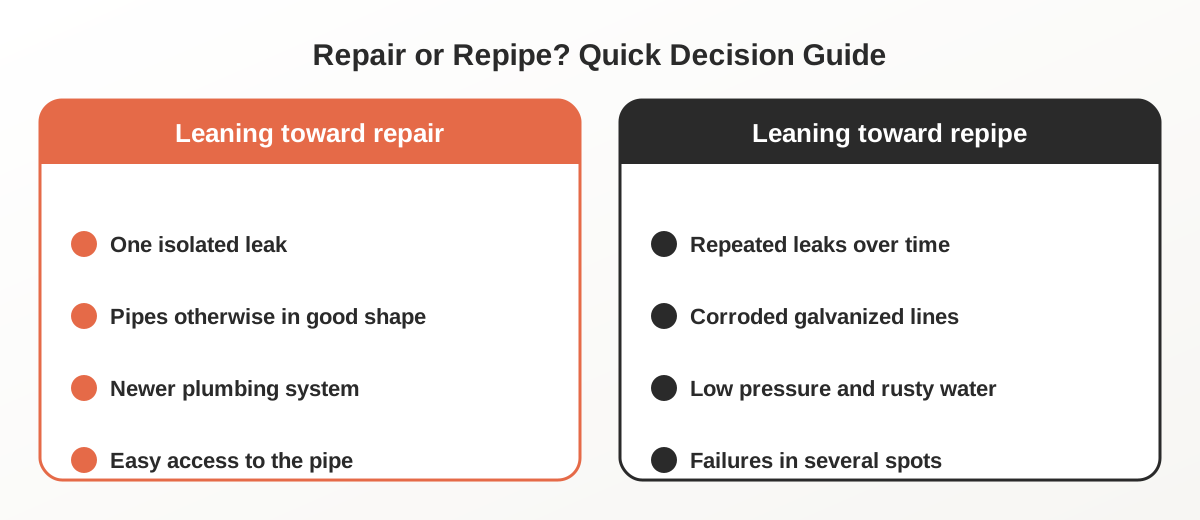
Pipe repair vs repipe comes down to pattern: one isolated leak in otherwise sound pipe usually points to repair, while repeated leaks, rusty water and low pressure point toward repiping. When you compare a pipe repair vs repipe quote, ask what condition the rest of the pipe is in and what warranty comes with each option. The Contractors State License Board lists what to check before hiring.
Quick Comparison: Repair vs. Repipe
| Factor | Spot Repair | Full Repipe |
|---|---|---|
| Cost | $150 – $1,500 | $4,000 – $15,000 |
| Disruption | 1 wall access, 1 day | Multiple walls, 3–7 days |
| Best for | Isolated failure, sound pipe system | Failing galvanized, repeated leaks |
| Pipe life after repair | Depends on rest of system | 50+ years (copper or PEX) |
| Insurance impact | Single event claim | May reduce future premiums |
| Home value impact | Minimal | Positive — updated plumbing is a selling point |
When a Spot Repair Is the Right Answer
A spot repair makes sense when the failure is genuinely isolated and the rest of your system is in reasonable condition. Here are the signs that points in that direction.
Copper or PEX system, well maintained
If your home has copper or PEX throughout and this is the first failure in years, one section replacement is almost always the right call. These systems can last decades with isolated repairs.
Single failure point, clean pipe around it
If the plumber opens the wall and finds one corroded or stressed section surrounded by solid pipe, replacing just that section is appropriate.
Newer home — built after 1990
Homes built after 1990 typically have copper or PEX supply lines and are rarely candidates for full repipe unless something went wrong with the installation.
First leak in the home’s history
One event after many years of no issues is a spot repair situation. A pattern of two or more failures in the same system is a different conversation.
When a Full Repipe Makes More Financial Sense
Sometimes patching is the expensive option in the long run. These are the signs that a repipe will save money over the next five years compared to repeated spot repairs.
Galvanized steel pipe throughout
Galvanized pipe has a lifespan of roughly 40 to 70 years, and much of Pomona’s older housing stock is approaching or past that range. When galvanized starts failing it corrodes internally, reducing flow and weakening at multiple points simultaneously. Patching one section leaves the rest at risk.
Second or third leak in the same system
If you are getting repeat failures — same system, different locations — the pipe material itself is failing, not just one unlucky section. Each repair at this stage is buying weeks or months, not years.
Discolored or rust-tinted water
Brown or reddish water that does not clear up quickly means the pipe interior is corroding and flaking. This is a sign of systemic failure, not a local problem. Patching does not address what is happening inside every foot of pipe.
Planning to sell within five years
Updated plumbing is a material disclosure in California real estate sales. A documented full repipe to copper or PEX adds credibility to the home and reduces buyer negotiation leverage on price.
Slab leak in a galvanized system
A slab leak in a galvanized system is usually the point where even conservative homeowners choose repipe. The alternative is repeatedly opening concrete every time another section fails — which for galvanized pipe at end of life can happen every one to two years.
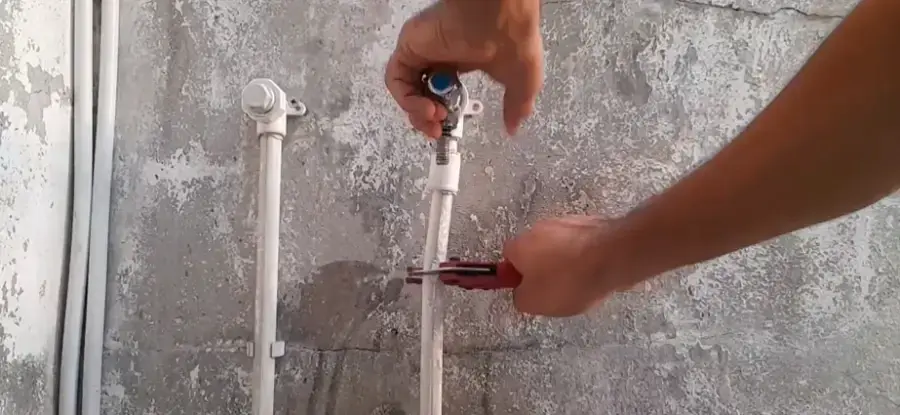
Pipe Materials Common in Pomona Homes
Pomona’s housing stock spans multiple eras, each with different pipe materials and different failure timelines.
| Pipe Material | Common in Pomona Homes Built | Expected Lifespan | Repair or Repipe? |
|---|---|---|---|
| Galvanized steel | Pre-1970 | 40–70 years | Repipe if multiple failures or rust in water |
| Copper | 1960s–2000s | 50–80 years | Spot repair in most cases |
| CPVC | 1980s–1990s | 25–40 years | Spot repair unless cracking is widespread |
| PEX | 2000s–present | 50+ years | Spot repair — very rarely needs repipe |
| Polybutylene | 1978–1995 | Known to fail early | Full repipe recommended — systemic failure risk |
🏠 Not sure what pipe material you have? If your home was built before 1975 and you have not replaced the plumbing, there is a reasonable chance it is galvanized steel. We can confirm the pipe material during an on-site assessment at no charge.
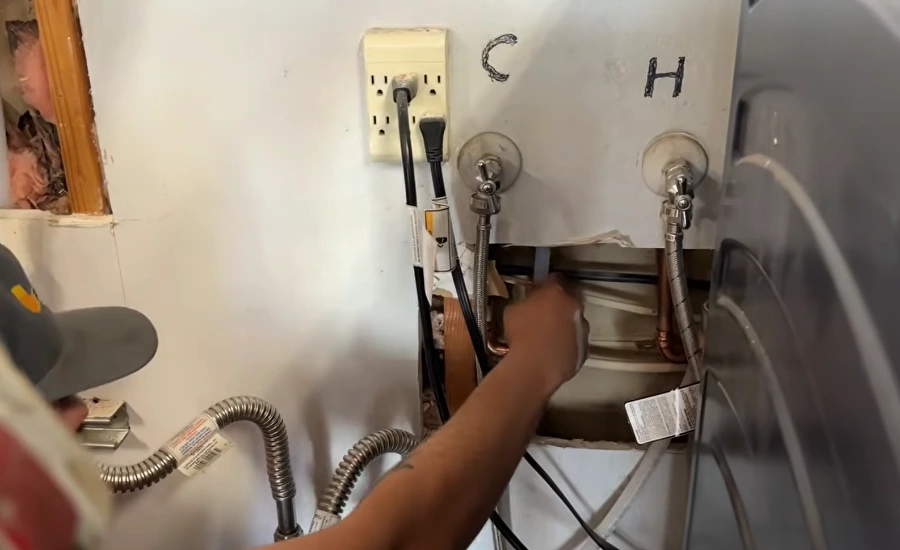
Pipe Repair vs Repipe: Common Questions
Answers to what Pomona homeowners ask us most about this topic.
How do I know if I need a full repipe or just a spot repair?
If you have a single failure in a copper or PEX system and the surrounding pipe is in good condition, a spot repair is the right call. If your home still has galvanized steel pipe, you have had multiple leaks, or your water is rust-tinted, a full repipe is likely the better long-term investment.
How much does a full repipe cost in Pomona?
A full repipe in a typical Pomona single-family home runs $4,000 to $15,000 depending on the home’s size, the pipe material being used, and how much wall and slab access is required. Copper and PEX are the most common replacement materials.
Does insurance cover the cost of repiping?
Homeowners insurance does not typically cover the cost of a full repipe unless it is required as a direct result of a covered sudden loss event. The water damage caused by a burst pipe in a galvanized system may be covered even if the repipe itself is not.
How long does a full repipe take?
Most single-family homes in Pomona take three to five days for a full repipe. You will be without water during portions of the work but typically not overnight. The plumber will coordinate water shutoff windows with you.
Can I live in my home during a repipe?
Yes, in most cases. The main inconvenience is periodic water shutoffs during the day. Most families find it manageable, though planning around the water shutoff schedule helps significantly.
Pipe burst? We respond fast — day or night.
Serving Pomona, Claremont, La Verne, San Dimas, Diamond Bar and the San Gabriel Valley.
Call (840) 226-2371 NowWhat to Expect When You Call
A real person answers
Call (840) 226-2371 any time. We ask where the water is coming from, whether you can reach the main shutoff and what has been affected.
Plain steps first
Before anything else, we tell you what to do right away to limit the damage, such as shutting off the water and moving belongings.
A clear plan and price talk
We explain your options and what drives the cost before work starts, so there are no surprises later.