


MOLD AND MOISTURE GUIDE
Mold After Water Damage: The 48-Hour Timeline
Mold does not appear the moment something gets wet, but the window to prevent it is short. Here is what happens hour by hour, what you can save and when the situation needs a professional.
Mold needs moisture, organic material and time. A burst pipe, water heater leak or roof leak supplies the moisture, and drywall paper, wood and carpet supply the food. What you control is time.
This guide explains the timeline and what to do at each stage. It is about prevention and sensible decisions, not a mold remediation service; for how water is removed and materials are dried, see our drying guide.
The Timeline After a Leak or Flood
| When | What is happening | What to do |
|---|---|---|
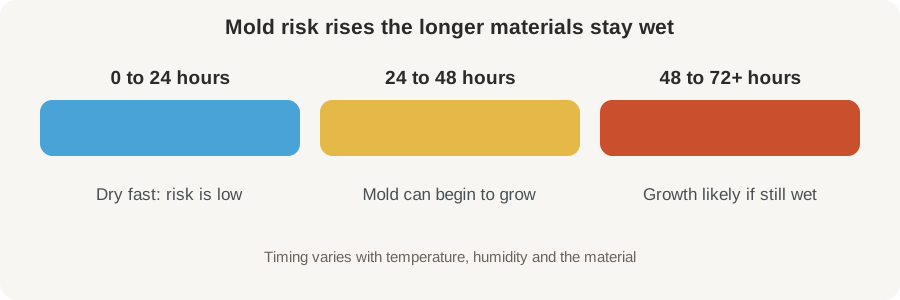
| 0 to 24 hours | Water spreads and soaks into porous materials. Mold has not usually established yet. | Stop the source, remove standing water and start drying; see the 24 to 72 hour checklist |
| 24 to 48 hours | The critical drying window. Damp materials start to become hospitable to mold. | Run fans and dehumidifiers, open windows when outdoor air is dry, lift wet carpet padding |
| 48 to 72 hours | Public guidance assumes mold may be growing on anything wet this long. Smells can begin. | Remove materials that cannot be dried; check readings with a moisture meter |
| Day 3 to 7 | Growth can spread across surfaces and into wall cavities if moisture remains. | Continue drying until readings return to normal; watch for visible growth or a musty smell |
| After a week | Established growth can be harder to clear and can affect air quality. | If growth is visible or the smell persists, get a professional assessment |
Why It Matters for Health
Mold exposure can cause sneezing, a stuffy or runny nose, coughing and itchy eyes or throat, and it can trigger asthma attacks in people with asthma. Repeated or long exposure can increase sensitivity. If someone in the home has asthma, allergies or a weakened immune system, treat any wet material seriously and consider staying elsewhere while it is dried.
What You Can Usually Save and What You Usually Cannot
Usually salvageable
Hard, non-porous surfaces such as tile, glass, metal, sealed stone and most plastics, once cleaned and dried. Solid wood furniture can often be dried and cleaned too.
Usually removed
Carpet and padding, ceiling tile, insulation, particleboard, cardboard, paper and fabric that stayed wet for more than a day or two, and drywall with visible growth.
Needs a closer look
Wall cavities, subfloors and the back of cabinets. A moisture meter and thermal imaging camera show what the surface hides.
Never mix products
Do not mix bleach with ammonia or other cleaners. Wash hard surfaces with detergent and water first, and wear gloves, goggles and a mask.
Keep Humidity Down While Things Dry
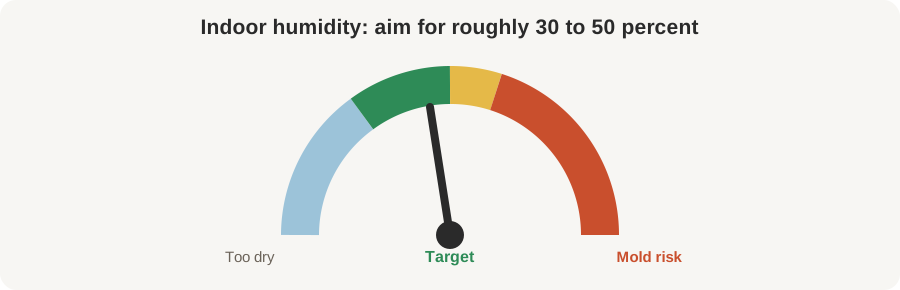
Indoor humidity below 60 percent, and ideally between 30 and 50 percent, makes it hard for mold to grow. A cheap hygrometer shows where you stand. Running air conditioning, a dehumidifier and fans together dries a room much faster than any one of them.
If your home was built before 1980, be cautious before cutting, sanding or scraping materials such as textured ceilings, old flooring and joint compound, which may contain asbestos or lead. Have them tested first. Our pipe identification guide helps you recognize which homes are likely to be in that older category.
When to Bring in a Professional
- Visible mold covers an area larger than roughly 10 square feet
- Growth is inside walls, under flooring or in the HVAC system
- The water was sewage or floodwater rather than clean supply water
- A musty smell persists after drying
- Someone in the home has asthma, severe allergies or a weakened immune system
- You are unsure how far the water spread
Common Questions
Sources and further reading
Water got into your walls or floors?
We can tell you what needs drying and what needs removing, before mold has the chance to take hold.
Call (840) 226-2371 — 24/7