


PREVENTION CHECKLIST
Water Damage Prevention Checklist for Pomona Homes
Most water damage is sudden and avoidable. This checklist gives you a short, seasonal routine that catches the usual causes before they flood a room.
Pomona does not freeze, so the usual cold-weather advice does not apply. The risks here are age, pressure, heat and appliances: older plumbing, high pressure on aging fittings, air conditioners working hard through long summers and appliance hoses that nobody looks at.
Spending half an hour a few times a year on the items below is far cheaper than drying a floor. To see what your plumbing is made of before you start, use our pipe identification guide.
The Checklist
| Task | How often | Why it matters |
|---|---|---|
| Find and test the main water shutoff | Twice a year | A valve that is stuck or hidden is useless in an emergency |
| Check water pressure with a gauge on a hose bib | Twice a year | Pressure above about 80 psi strains pipes and fixtures; plumbing code generally calls for a regulator above that |
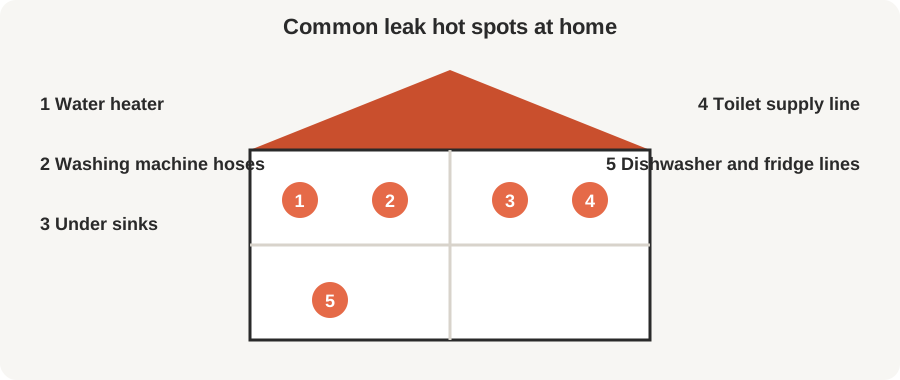
| Inspect washing machine hoses and replace old rubber ones | Every few years | Burst supply hoses are a leading cause of indoor flooding |
| Look under every sink and behind the toilet | Every few months | Small drips and rust show up here first |
| Inspect the water heater and its connections | Twice a year | Rust, moisture or old age signal that it may fail; see our water heater guide |
| Flush sediment from the water heater | Yearly, if the manufacturer advises | Hard water builds sediment faster |
| Clear the AC condensate drain line and check the drip pan | Start of summer | A clogged line can overflow into a ceiling or closet |
| Clean gutters and check drainage away from the house | Before the winter rains | Water pooling at the foundation seeps in |
What Is Specific to Pomona
Long, hot summers
Air conditioners run hard and produce a lot of condensate. A blocked drain line or a rusted drip pan is a common source of ceiling stains.
Hard water
Scale builds up in pipes, fixtures and water heaters over the years. See why pipes fail here for how it contributes.
A wide mix of home ages
From historic homes to tract developments from the 1960s onward, different materials need different attention.
Short, heavy winter rains
Blocked gutters and poor grading can send water toward the foundation just when the ground is wettest.
Sensors and Automatic Shutoffs
A small battery-powered leak sensor costs little and can alert you to a leak under a sink or beside a water heater long before you would find it. A smart shutoff valve or flow monitor on the main line goes further: it can close the water automatically if it detects an unusual flow. Neither replaces maintenance, but both shorten the time water has to do damage.
Before You Travel
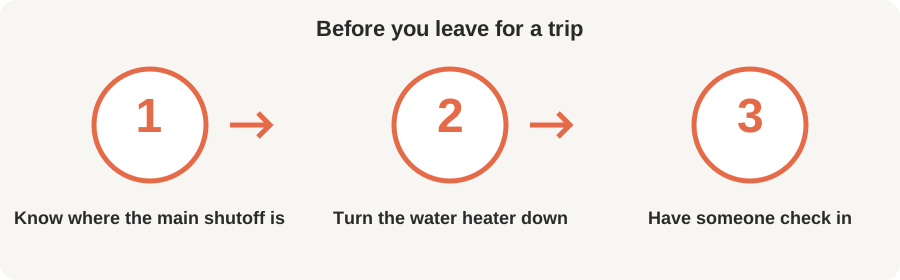
- Turn off the main water valve if you will be away for more than a few days
- Switch the water heater to vacation mode or off
- Ask someone to check the house if you will be away for a long time
- Make sure you know how to find your shutoff valve, and tell the person checking
If Something Does Go Wrong
Prevention reduces the odds but cannot remove them. When water does get in, speed matters more than anything else; keep the 24 to 72 hour checklist handy and, for burst pipes, the first-steps guide.
Common Questions
Sources and further reading
Want a second opinion on your plumbing?
If something on this list worries you, call and we will tell you honestly whether it needs attention.
Call (840) 226-2371 — 24/7