
DIAMOND BAR, CA
Burst Pipe Repair in Diamond Bar, CA
Diamond Bar is a newer city than most of its San Gabriel Valley neighbors — but “newer” does not mean problem-free. Copper pipe from the 1960s through 1990s is now entering the age range where pitting corrosion and pinhole failures become increasingly common. We cover all of Diamond Bar 24/7.
Burst pipe repair Diamond Bar starts with stopping the water. Close the main shutoff, open a low faucet to relieve pressure and photograph the damage before any cleanup. Copper pipes from the 1960s to 1990s can develop pinhole leaks, so ask whether nearby sections show the same pitting. Ask for a written estimate that covers both the pipe and the drying, because wet drywall left in place can grow mold within days. Keep this checklist handy for any burst pipe repair Diamond Bar call, and see the EPA guidance on fixing household leaks for why small leaks should never wait.
Diamond Bar’s Plumbing Profile: A Different Problem Than Older Cities
Diamond Bar was incorporated as a city in 1989, but most of its housing stock was built between the 1960s and 1990s — making it significantly newer than neighboring Pomona, Claremont, or La Verne. The key difference: Diamond Bar does not have a widespread galvanized steel problem. Its homes were built with copper supply lines.
Copper is the better pipe material — but copper from the 1960s through the 1980s is now 40 to 60 years old and entering the age range where pitting corrosion becomes a real issue. Pitting corrosion in copper pipe is different from galvanized corrosion: it tends to produce pinhole leaks rather than dramatic bursts, and it often runs for days or weeks before being noticed — which means the water damage by the time it is found can be significant.
Diamond Bar’s hillside topography adds a second variable that its flatter neighbors do not face to the same degree. The city’s characteristic hillside lots mean many homes have slab-on-grade foundations with supply lines running under slopes. When the soil shifts — and foothill soils in this part of Los Angeles County do shift, especially with seasonal moisture changes — those underground lines experience stress at the joints. Diamond Bar’s slab leak rate reflects this geography directly.
Why Copper Pipes Fail in Diamond Bar Homes
Diamond Bar homeowners often assume that because their home is not old and does not have galvanized pipe, they are safe from plumbing failures. That assumption is incorrect. Here is what is actually happening inside 40-to-60-year-old copper systems.
🔬 Pitting corrosion
Pitting corrosion creates small, localized holes in copper pipe rather than widespread thinning. The San Gabriel Valley’s water chemistry — slightly acidic pH combined with hard water mineral content — accelerates pitting in older copper. A pipe can look sound from the outside while having pinhole perforations developing internally.
🌡️ Thermal stress from hillside exposure
Diamond Bar’s hillside homes have supply lines that may run along exterior walls or through uninsulated garage areas with wide temperature variation. Repeated thermal expansion and contraction over decades fatigues solder joints and causes pinhole failures at connection points.
🌎 Slope soil movement
Hillside lots in Diamond Bar experience more soil movement than flat properties. Underground supply lines running under sloped ground are subject to differential settlement — the soil on one side of the pipe shifts while the other stays put, applying bending stress to the pipe over time.
💧 Slab-on-grade foundation risks
A large portion of Diamond Bar’s housing used slab-on-grade construction for hillside lots. Supply lines embedded in the slab cannot be inspected and are only discovered when they fail — sometimes after weeks of slow leaking that damages the subfloor from below before any surface sign appears.
Signs of Copper Pipe Problems in Your Diamond Bar Home
Because copper pipe tends to produce pinhole leaks rather than sudden dramatic bursts, the warning signs are subtler — but they are there.
Green staining near fittings
Green or blue-green staining on or near copper fittings, on cabinet flooring under sinks, or around pipe access points indicates active corrosion at that location.
Rising water bills
A bill that has crept up $30–$100 over recent months without an explanation is one of the clearest signals of a slow ongoing leak — often a slab leak in hillside homes.
Warm spots on the floor
A warm or slightly damp area on a floor — especially on tile or hardwood over a slab — that has no explanation above it is a slab leak until proven otherwise.
📍 Diamond Bar homeowners: If your home was built between 1965 and 1985 and you have noticed any of these signs, a pressure test and acoustic detection assessment is worth scheduling before a failure forces the issue. Prevention is significantly cheaper than emergency restoration.
Our process
How We Handle a Failed Copper Line in Diamond Bar
Copper that is 40 to 60 years old rarely fails the way old galvanized steel does, so the repair starts with working out how this particular line gave way.
- 1
Read the failure first
A pinhole from pitting, a split from thermal stress and a leaking joint all look like a burst pipe, but each needs a different fix. Green staining at fittings, the pipe’s age and where the water appeared tell us which one we are dealing with before anything is cut.
- 2
Locate the leak without opening more than needed
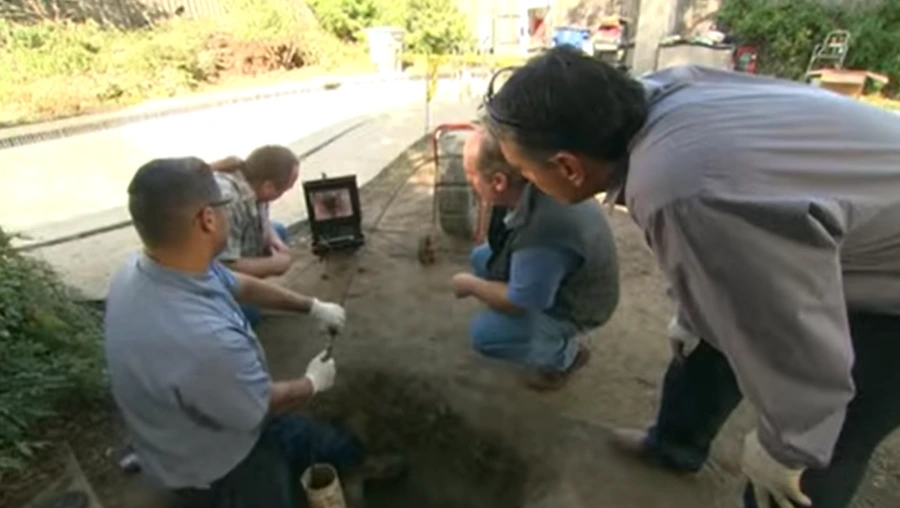
When the line runs under the slab or inside a wall, we pressure test it to confirm the leak and use acoustic detection to pinpoint it. That keeps the opening small and the repair targeted.
- 3
Repair the section, then test its neighbors
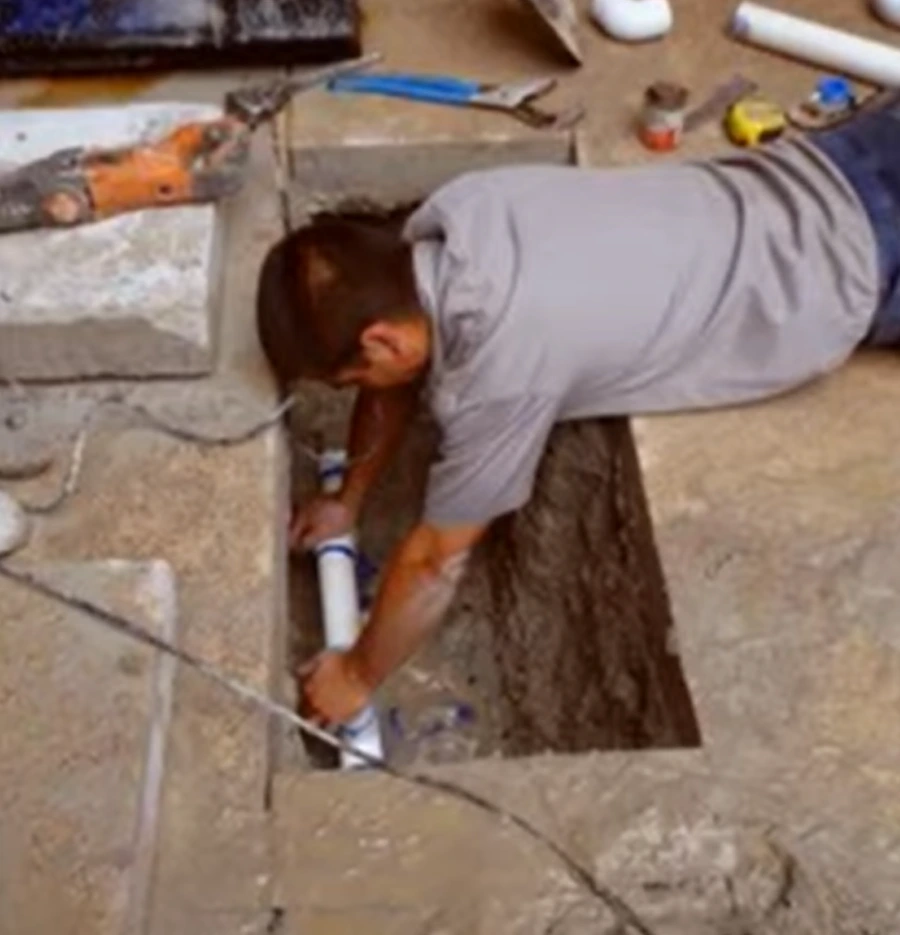
We replace the failed section, pressure test the line again, and inspect nearby runs for the same wear. Pitting rarely stops at one spot, so we tell you plainly what we saw.
- 4
Map the moisture and dry the structure
Readings in the wall cavities and subfloor show how far the water travelled. Drying equipment stays in place until those readings match dry material, and the photos and numbers go into your claim file.
Curious what drying involves? Read our guide to structural drying after a burst pipe.
Repair Costs in Diamond Bar
Because Diamond Bar homes generally have copper rather than galvanized pipe, repair costs for straightforward failures tend to be on the lower end. Slab leaks on hillside properties can add complexity and cost depending on access.
| Job Type | Typical Range | Diamond Bar Context |
|---|---|---|
| Copper pinhole or joint repair | $150 – $700 | Most common failure type for this age copper |
| Slab leak detection and repair | $1,000 – $3,500 | Elevated in hillside slab-on-grade homes |
| Copper pipe section replacement | $400 – $1,200 | When pitting is localized to one area |
| Water extraction and structural drying | $800 – $3,000 | Higher for hillside homes with complex subfloor access |
| Full copper repipe (rare but needed for systemic pitting) | $4,000 – $12,000 | For homes with widespread pitting corrosion throughout |
Burst Pipe Repair Diamond Bar: Common Questions
Do you serve Diamond Bar, CA for burst pipe repair?
My Diamond Bar home has copper pipes. Am I safe from failure?
What causes slab leaks in Diamond Bar homes specifically?
How do I find out if I have a slab leak without tearing up the floor?
Is a burst copper pipe covered by homeowners insurance in Diamond Bar?
Burst pipe in Diamond Bar? We respond 24/7.
Copper pipe repair, slab leak detection, water cleanup — full service. Real pricing before we start.
Call (840) 226-2371 Now